In This Guide
A Tapestry of Heritage in San Fernando
Tucked away on a scenic hilltop in San Fernando, La Union, the Ma-Cho Temple stands as a vibrant symbol of Filipino-Chinese heritage and spiritual harmony. Dedicated to Mazu, the Chinese goddess of the sea, this cultural gem has captivated visitors since its establishment in 1977. The sanctuary blends Taoist traditions with Catholic influences in a way that truly reflects the Philippines’ rich multicultural fabric.
Inside the temple, visitors find statues and altars dedicated to Mazu alongside other Taoist deities like Guan Yu and Wei Tuo. Devotees offer incense, pray, and make wishes for good fortune, health, and protection. Beyond its religious importance, the temple commands stunning panoramic views of San Fernando and the coastline. The temple opens daily from 7:00 AM to 5:00 PM and requires no entrance fee.
Architectural Splendor
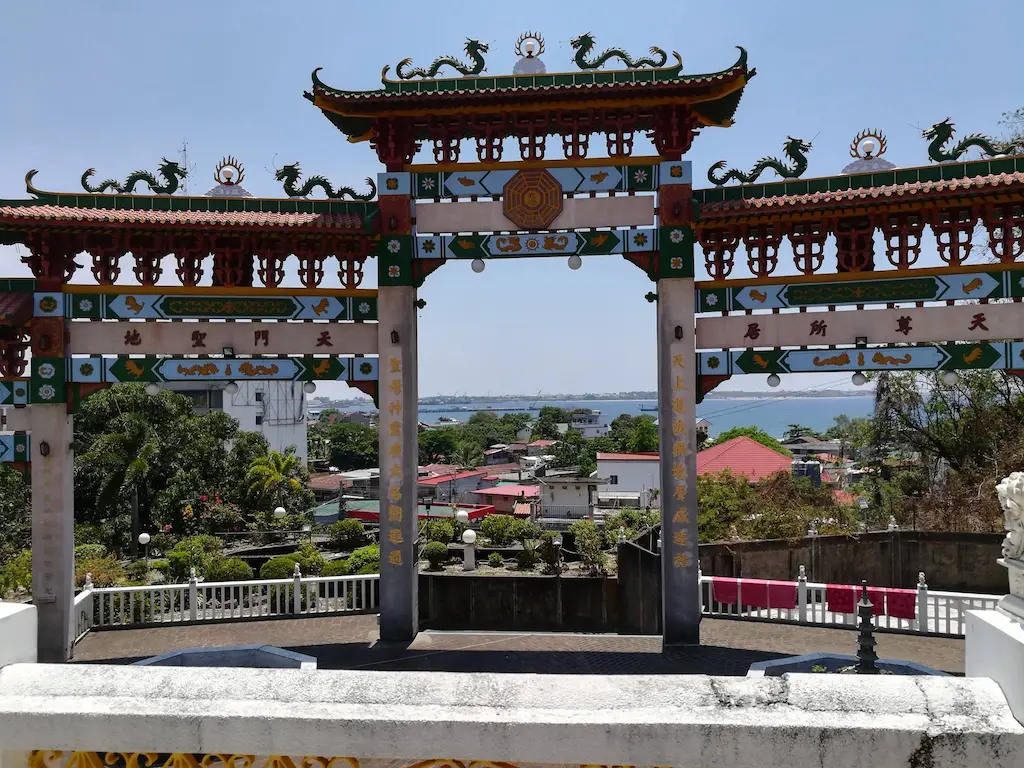
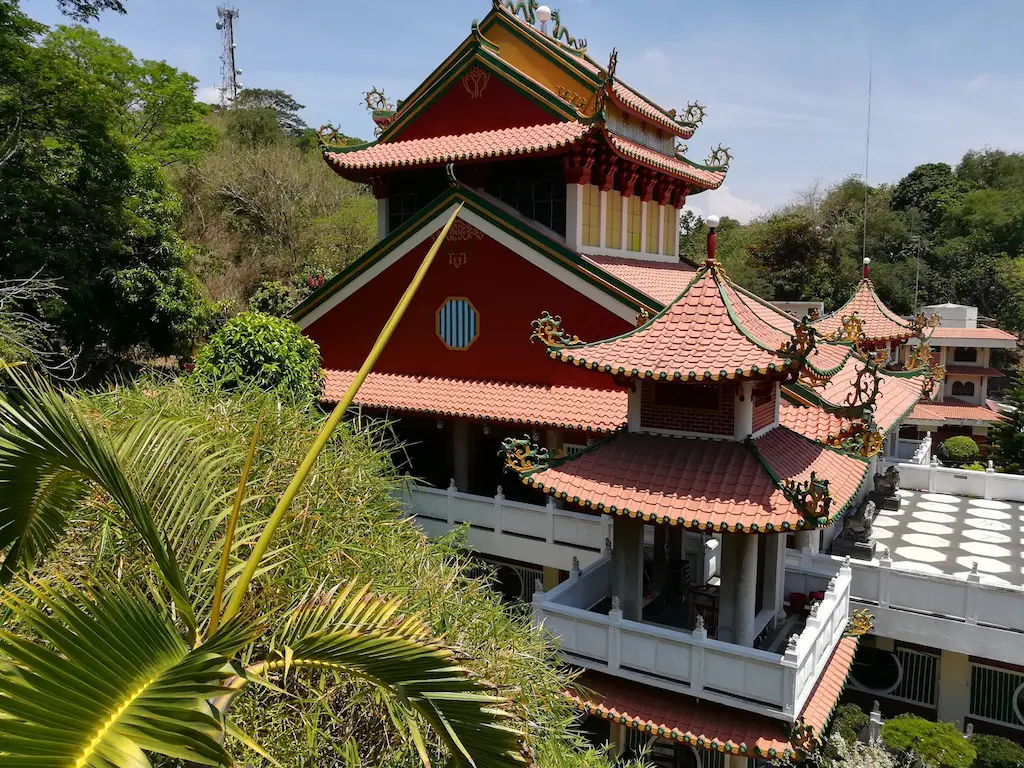
Perched 70 feet above sea level, the Ma-Cho Temple commands attention with its vibrant, seven-story, 11-tiered structure. The architecture beautifully merges traditional Chinese elements with local influences, crafted using materials imported directly from Taiwan and China. Taiwanese laborers brought the intricate vision to life under the guidance of architect Thomas Diokno.
The Spider-Type Dome
One of the temple’s most striking features remains its spider-type dome, an extremely rare design in the Philippines. This dome features interlinking wood carvings of saints rising in 13 tiers, creating a mesmerizing circular pattern that immediately draws the eye upward. Camphor wood carvings of lions and dragons decorate the exterior, serving as ancient symbols of protection and power.
Gardens and Altars
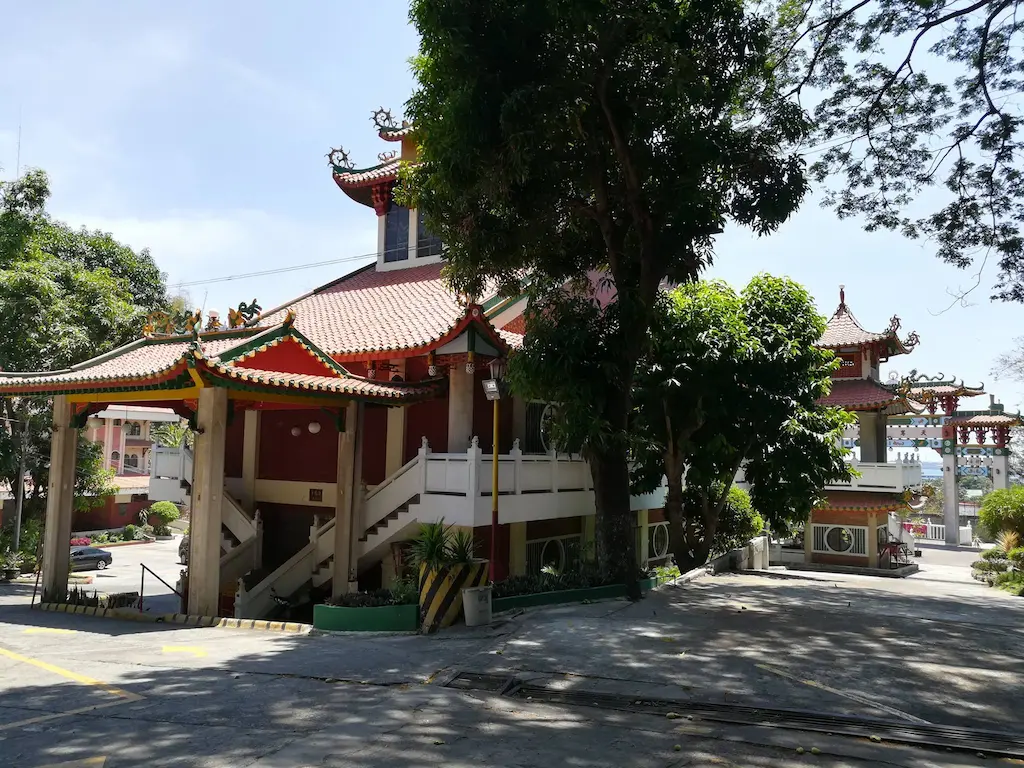
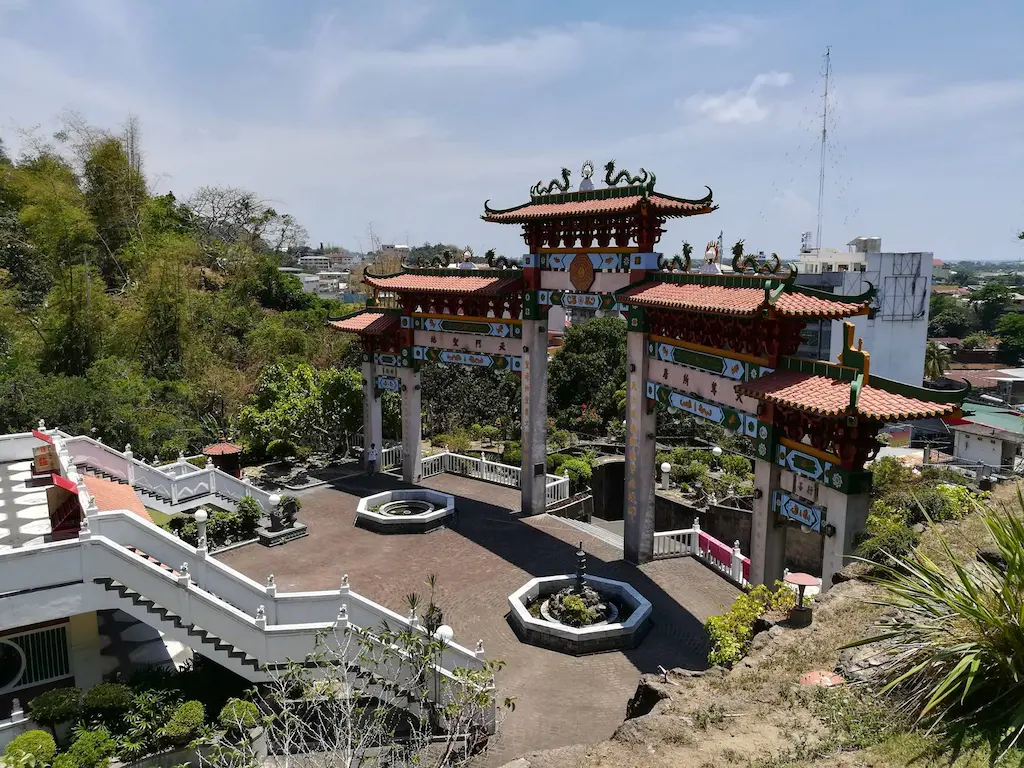
The temple complex holds a treasure trove of attractions. The Liang Thing Pagoda, the Bell and Drum Towers, and two circular ponds filled with koi fish and water lilies provide immense charm. Stone statues of the 18 Arhats line the retaining wall. Inside the meditation room, a grand staircase leads up to Mazu’s central statue, surrounded by ancient Chinese wood carvings and beautiful ornaments.
Spiritual Significance
The Ma-Cho Temple transcends religious boundaries, acting as a spiritual sanctuary for many different people. Taoist devotees visit to seek Mazu's blessings for safety at sea, good fortune, and healing. Weekly “Buyong” sessions allow devotees to communicate with the gods through temple priests, asking questions about their future or seeking guidance.
What sets the Ma-Cho Temple apart is its unique inclusivity. It openly welcomes worshipers and non-worshipers alike, including local Catholics. This openness roots itself in the shared veneration of Mazu and the Virgin of Caysasay, symbolizing a profound unity between Taoist and Catholic traditions. Each year, locals bring Mazu’s statue to the Basilica of St. Martin in Taal for a pilgrimage, underscoring the temple’s role as a cultural bridge.
Who was Mazu?
Mazu represents the Taoist and Chinese Buddhist goddess of the sea. Believers trust she protects fishermen and sailors out on the unpredictable waters. Born as a young girl named Lin Moniang in the late 10th century during China's Song Dynasty, legend says she possessed extraordinary abilities to predict weather and rescue those in distress.
Today, people widely worship her in coastal regions across China, Taiwan, and Vietnam. Mazu holds great cultural significance, seen universally as a symbol of protection, guidance, and good fortune in maritime communities.
Understanding Taoism
Taoism, or Daoism, is an ancient philosophical and spiritual tradition originating in China, based on the teachings of Laozi. It emphasizes living in absolute harmony with the natural rhythms of life.
The Tao and Simplicity
At the core of the religion sits the concept of the Tao, translating to "the Way" or "the Path." It represents the underlying principle of the universe. Taoists believe that by aligning with the Tao and embracing complete simplicity and spontaneity, a person attains true inner peace and spiritual fulfillment.
Yin and Yang & Wu Wei
Taoism incorporates the concept of yin and yang, representing the complementary and interconnected forces in the universe. The religion also focuses heavily on Wu Wei, often translated as "effortless action." This principle suggests acting in accordance with the natural flow of the world, without force or unnatural striving.
How to Get to Ma-Cho Temple from Manila
Traveling from Manila to La Union takes around 4 to 5 hours via the Tarlac–Pangasinan–La Union Expressway (TPLEX). If you drive a car or ride a motorcycle, head north toward San Fernando City. For commuters, several major bus lines like Partas, Viron Transit, and Fariñas Transit operate daily routes from Cubao or Pasay heading toward San Fernando or Laoag. Ask the driver to drop you off at the San Fernando City town proper. From the city center, a short tricycle or scooter ride takes you straight up the hilltop to the temple gates.
Is Ma-Cho Temple Worth Visiting?
Yes, this majestic Taoist landmark deserves a spot on any northern itinerary. It offers a wonderful spiritual and visual contrast to the busy surf breaks of nearby San Juan. The combination of intricate multi-tiered architecture, rare wood carvings, and the peaceful Bamboo Garden provides immense value. Because the temple requires no entry fee and sits just a few minutes off the main highway, it serves as an ideal, enriching stop during a La Union road trip.
Best Time to Visit Ma-Cho Temple
The dry season from November to April brings the most comfortable weather for exploring the open-air courtyards and climbing the white stone staircases. To experience the culture at its most vibrant, plan a visit between September 21 and 26. This period marks the annual Mazu festival and pilgrimage, filling the complex with traditional processions, cultural rituals, and beautiful celebrations.
Ma-Cho Temple Opening Hours
The temple welcomes visitors every single day from 7:00 AM until 5:00 PM. Arriving right at opening hour rewards you with cool morning air and empty pathways. Late afternoon also works beautifully, as the sunset over the West Philippine Sea bathes the red-tiled roofs in a warm, cinematic light.
Hotels and Restaurants Near Ma-Cho Temple
The central location in San Fernando City puts you close to excellent local dining and comfortable accommodations.
- Where to Eat: Head down to the city proper to sample authentic Filipino-Chinese dishes at local eateries, or drive 10 minutes north to San Juan to explore beachfront cafes, specialty coffee shops, and fresh seafood spots.
- Where to Stay: San Fernando City center holds several budget-friendly hotels and business inns perfect for a quick overnight stop. If you prefer ocean views and a laid-back lifestyle, look for surf resorts and boutique hostels along the coastline of San Juan.
Visit the temple early in the morning or late in the afternoon. The complex looks absolutely stunning covered in soft, golden-hour light, and the cooler weather makes exploring the staircases much more comfortable.
Nearby Escapes: After visiting the temple, take a short drive to San Juan for sunset surfing, or head inland to hike the trails leading to Tangadan Falls.