In This Guide
Discovering Solong Eco Park
Located in Camalig, Albay, Solong Eco Park offers travelers an authentic, uncommercialized nature escape. Opened in 2017, this accessible gem perfectly balances mild adventure with serene provincial slow living. Just a short drive from the Bicol International Airport, the sanctuary provides an excellent retreat for those looking to explore the outdoors without battling massive crowds.
The Road to Solong Eco Park
The journey to the park sets the perfect tone for a slow-living adventure. Riding a scooter through the provincial roads of Camalig immerses you instantly in Albay's rural charm. Towering coconut palms densely line the narrow, well-paved route, casting shifting shadows and creating a natural canopy against the tropical sun.
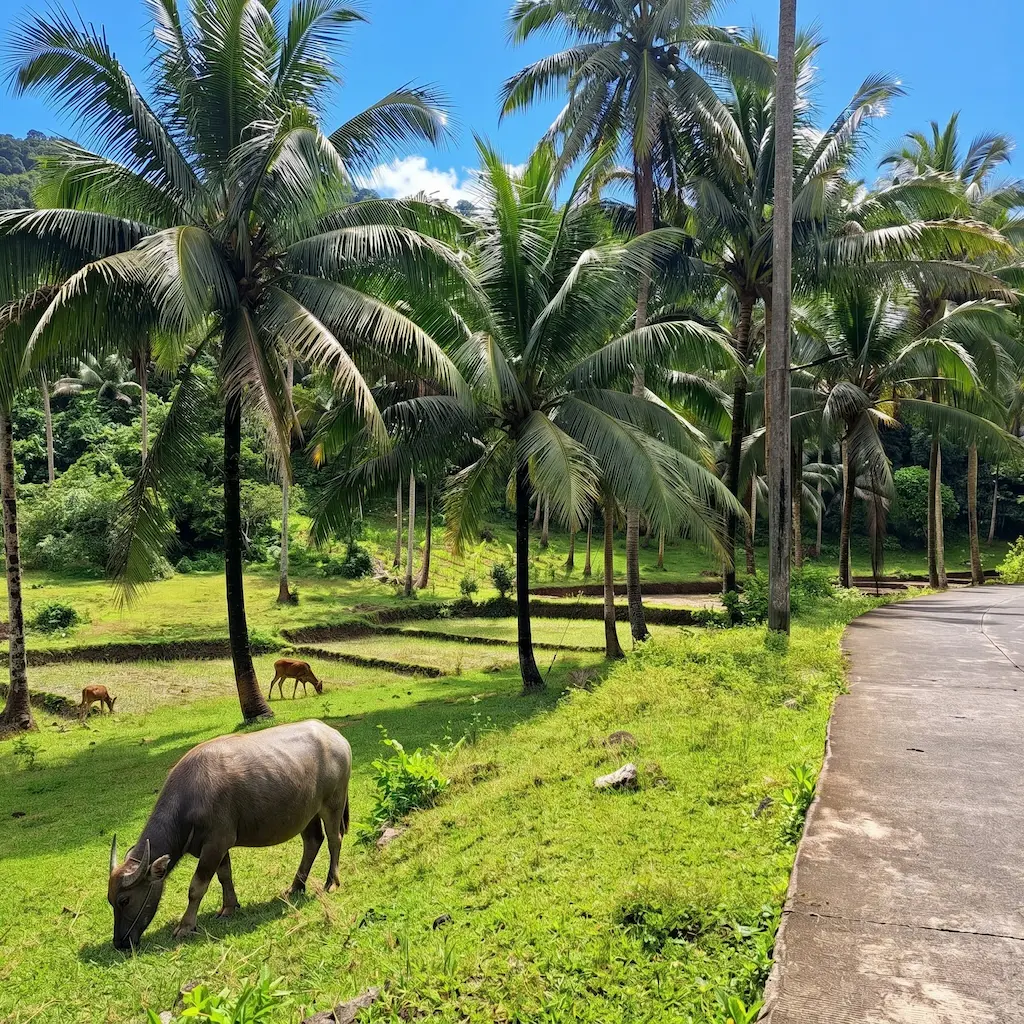
Along the way, you share the road with friendly locals and free-roaming livestock. Keep a relaxed, easy pace, as brown cows and grazing carabaos (water buffalo) frequently wander along the grassy shoulders. Lush green paddies and fruit-heavy banana trees frame the landscape, offering countless opportunities to pull your scooter over and capture the quintessential Bicolano countryside.
What Makes Solong Eco Park Special?
Unlike heavily commercialized tourist traps, this 6.5-hectare haven preserves its raw, natural Bicolano heritage. It seamlessly blends light physical activity with enriching agricultural immersion, allowing visitors to connect deeply with the land. The park operates strictly on a community-driven model, ensuring that your visit directly supports the local farmers and volunteer guides who maintain this pristine environment.
Solong Eco Park Opening Hours
The park welcomes visitors every day, including weekends and public holidays, from 7:30 AM to 4:30 PM. Arriving right when the gates open ensures a cooler hike up Solong Hill and gives you the absolute best chance to spot Mount Mayon before the midday clouds gather. To avoid the heavy weekend foot traffic and experience true tranquility, plan your visit on a quiet Tuesday or Wednesday morning.
Best Time of Year to Visit
Choosing the right season heavily influences your experience. The dry months from March to May provide the clearest skies, maximizing your chances of seeing the nearby volcanoes without thick cloud cover. Visiting during the wet season, from June to November, presents a different kind of beauty. The agricultural landscape looks incredibly lush and vibrant during these months. However, expect muddy trails and dripping cave ceilings, which make the descent slightly more challenging.
Trekking Solong Hill
Reaching the summit of Solong Hill requires a brief 15 to 30-minute hike. To combat the often slippery and muddy slopes, the park management creatively recycled over 500 old car tires to form the trail's staircase. This sustainable solution makes the ascent highly manageable for beginners and families.
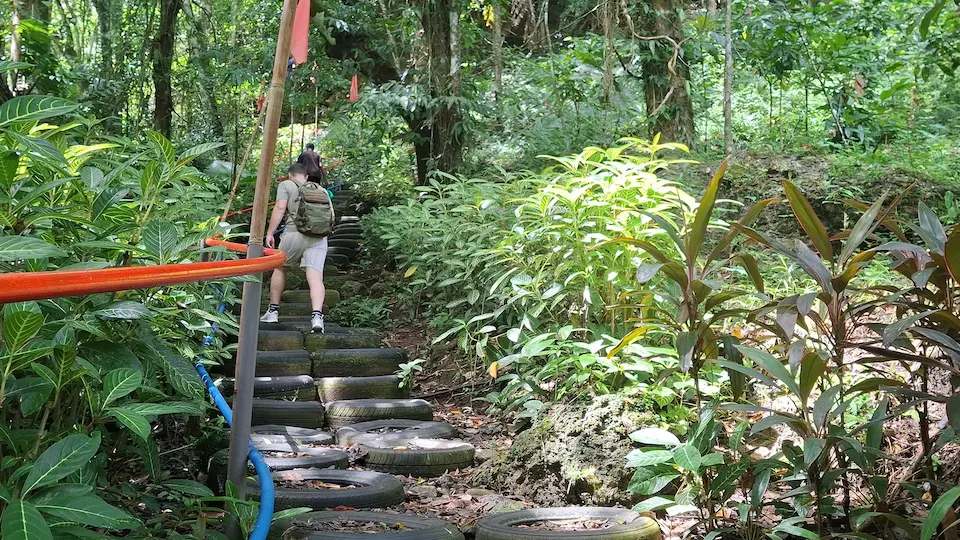
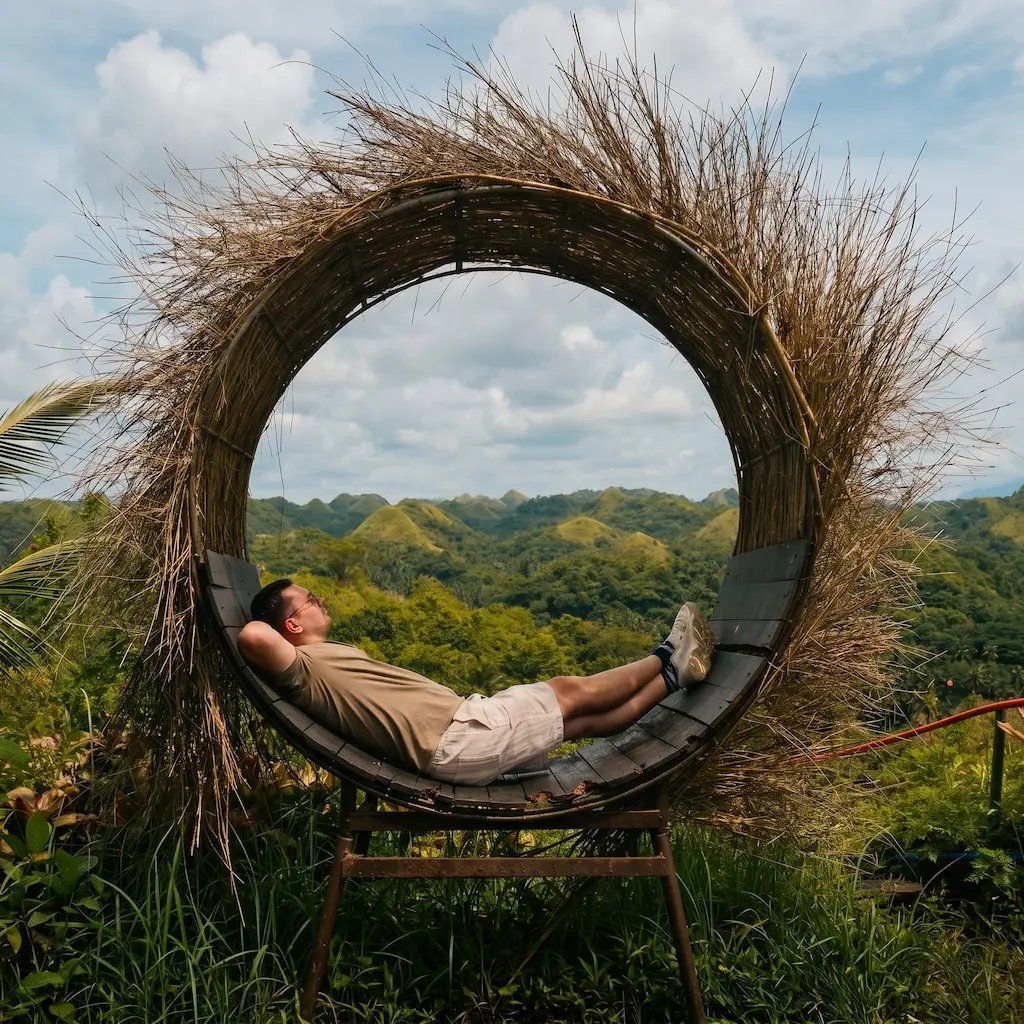
Once you reach the 60-meter peak, a spectacular 360-degree panorama rewards your effort. From the viewpoint, you look out over the conical, lush green mounds of the Quitinday Hills. Most importantly, the summit provides an unobstructed view of Albay's famed Magayon Trio - Mount Mayon, Mount Masaraga, and Mount Malinao. A Bali-inspired "bird's nest" portal at the top serves as the perfect foreground for your photography.
Spelunking Crystal Cave
A short descent from the opposite side of the hill leads you straight into the depths of Solong Cave, also known as Crystal Cave. The 1,000-square-meter cavern houses fascinating calcites, stalactites, stalagmites, and shimmering flowstones. Following strict environmental regulations, the Department of Environment and Natural Resources (DENR) only permits exploration up to the first 150 meters to preserve the delicate ecosystem.
During the guided tour, look closely at the rock walls to spot ancient seashell fossil imprints. These fossils provide stunning visual proof that this entire mountain once sat completely underwater thousands of years ago. Fruit bats and huntsman spiders inhabit the cave ceiling, adding a thrilling touch of wildlife to the subterranean trek.
Agri-Tourism & Slow Living
Beyond the hiking trails and caves, Solong Eco Park functions as a thriving agri-tourism site. Over 3,000 fruit-bearing trees line the property, alongside a flourishing bee farm and an expansive dragon fruit plantation. Visitors can participate in a "Pick and Bring Home" program, harvesting fresh produce like cacao, pineapple, taro, and bananas directly from the earth. The local staff also offer cacao and tablea tasting sessions, allowing you to savor the rich flavors of Bicol's agricultural heritage.
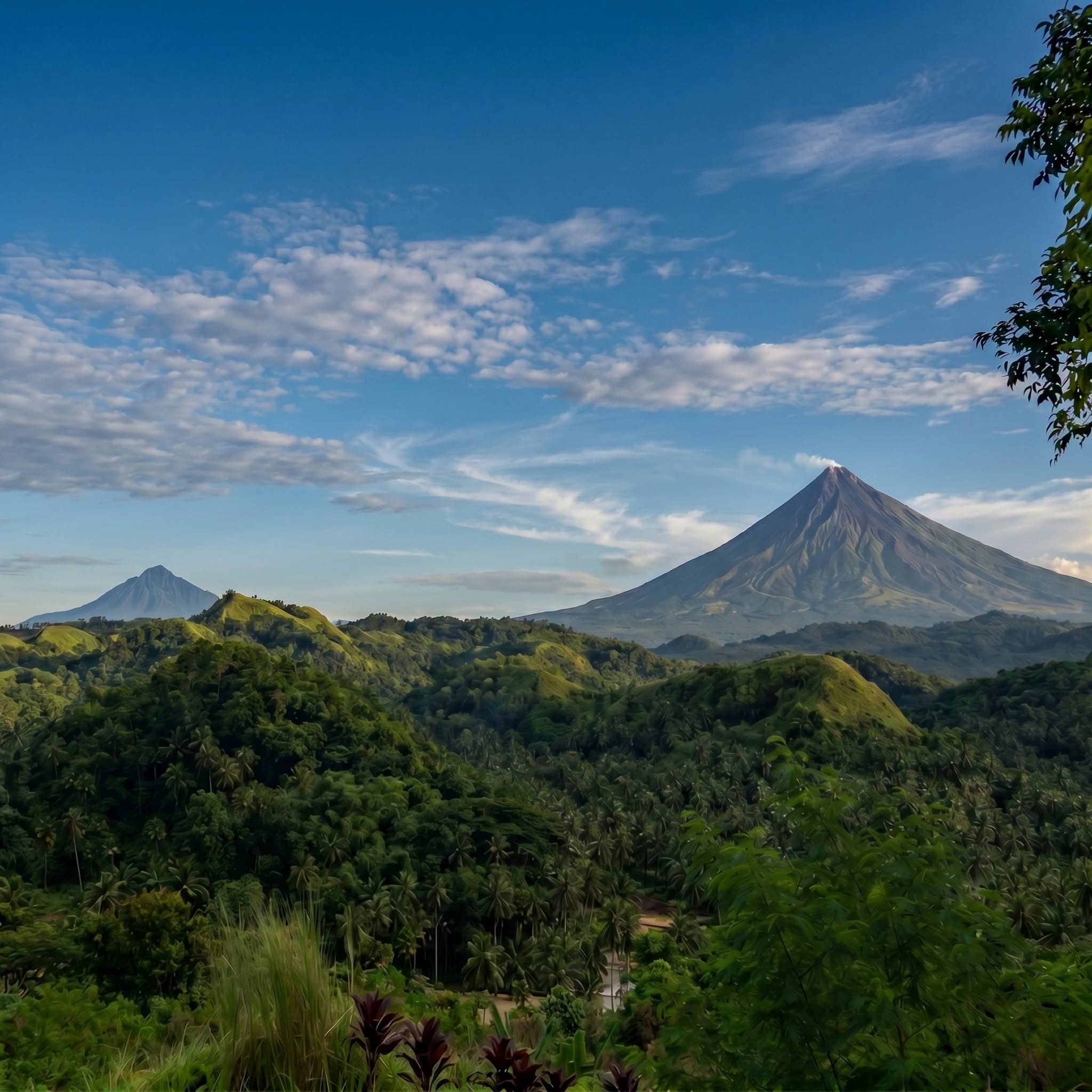
Arrive right at 7:30 AM when the gates open! The temperature stays cool (often dropping below 20°C in the early hours), and you get the absolute highest chance of seeing Mount Mayon's perfect cone clearly before the midday clouds roll in.
Don't forget to pack a small flashlight for the cave, as it makes spotting the tiny sea fossils much easier.
Packing, Food & Nearby Spots
A smooth trip requires minimal but specific gear. Wear proper trekking sandals or sturdy shoes, as the recycled tire steps get surprisingly slick, especially after morning dew. Carry a small flashlight to illuminate the cave's fossil details, and apply insect repellent before entering the forested paths.
Regarding food, the park focuses primarily on agricultural experiences rather than heavy dining. Bring a reusable water bottle and light snacks for the hike. Afterward, ride your scooter back down to the Camalig town proper to find local eateries. Order a hearty serving of authentic Bicolano Pinangat - a rich, spicy taro leaf dish cooked in coconut milk that perfectly defines Bicolano cuisine.
Because exploring Solong Eco Park typically takes only half a day, you can easily pair it with these other exceptional, slow-living spots nearby to complete your Albay itinerary:
- Quitinday Green Hills: Head over to these rolling emerald peaks, famously known as the Chocolate Hills of Bicol, for an incredible sunset trek.
- Sumlang Lake: Rest your legs and float on a traditional bamboo raft across peaceful waters while enjoying an unobstructed view of Mount Mayon.
- Quituinan Hill: Drive up to this lush hilltop to ride horses, pitch a tent, or simply enjoy a quiet afternoon picnic.
- Kawa Kawa Hill: Visit the neighboring city of Ligao to walk the rim of this unique caldera, famously known as "the hill without a top."
Travel Logistics & Costs
How to Get There
Travelers coming from Manila can board a Legazpi-bound bus and request a drop-off at the Camalig town proper. From the town center, hire a local tricycle to take you directly to Barangay Solong. The roundtrip tricycle fare usually costs around 300 to 400 PHP.
Entrance Fees & Costs
The park remains incredibly budget-friendly. Management charges a 50 PHP entrance fee plus a 20 PHP environmental fee per person. If you hire a local volunteer guide for the cave or the hill, tip them generously for their time and knowledge, as they rely heavily on visitor gratuities.
The Lazy Traveler Verdict
Summary: Solong Eco Park perfectly balances light adventure with authentic provincial slow living. The recycled tire trails, ancient cave fossils, and community-driven agri-tourism make it a highly rewarding, uncommercialized escape in Albay.