In This Guide
The Dark Legend of the Name
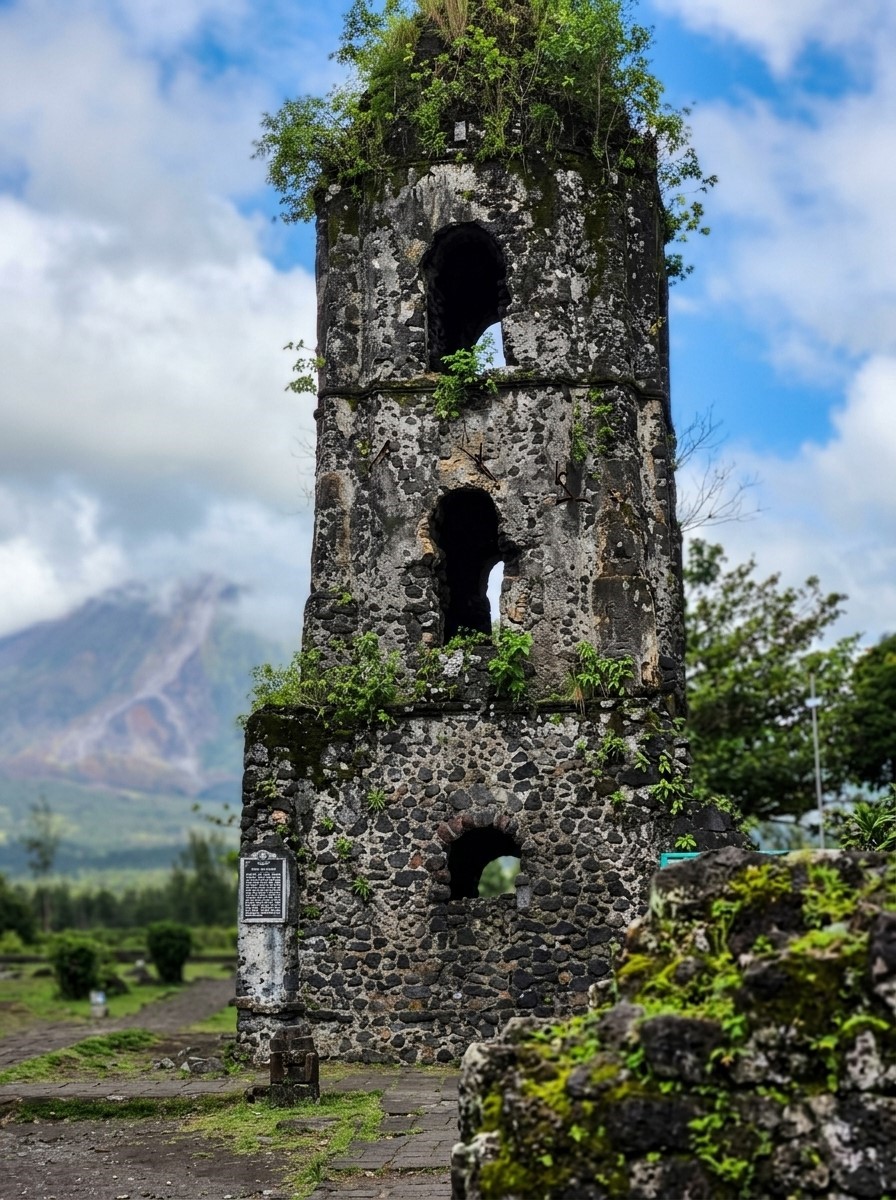
There is no visual more synonymous with the Bicol region than the moss-draped belfry of the Cagsawa Ruins. Yet, beneath the picturesque surface lies a rich tapestry of folklore. The name "Cagsawa" has a chilling origin story rooted in ancient folklore. It comes from two local words: "Kag" (meaning owner or master) and "Sawa" (meaning python).
Before Spanish priests arrived, local tribes allegedly worshipped a massive, mythical python that ruled the land. Local lore suggests that building a Christian church over this ancient pagan ground angered the spirits. Consequently, many elders believed the volcano's fiery wrath was the snake fighting back.
A History of Destruction
While the image of a single, catastrophic volcanic eruption dominates popular imagination, the reality is far more tragic. Most people think the church was only destroyed once by the volcano, but it actually suffered multiple tragedies.
- 1587: The original church was built out of wood and thatch.
- 1636: Dutch pirates raided the coast, looted the town, and burned the entire church to the ground.
- 1724: A Spanish friar rebuilt it using heavy volcanic stones to withstand attacks and fires.
- 1814: The volcano claimed it for good.
The Great "Buried Church" Myth
One of the most persistent legends told to visitors is that they are walking directly above an intact, sunken sanctuary. For decades, tourists were told that the entire church building was buried intact right under their feet, but modern historians and photos from the early 1900s have proven this wrong.
In truth, the giant front wall, or facade, of the church actually survived the 1814 eruption and stood tall next to the bell tower for over a century. Because the town was abandoned, the church was left to decay, and severe earthquakes in the 1950s finally collapsed the heavy stone walls. Today, the foundation, broken pillars, and a destroyed convent are what actually lie buried under the grass.
The Belfry as a Tombstone
Beyond the myths and folklore, the ruins hold a deeply somber reality. The most haunting part of Cagsawa is its role as a massive graveyard. When Mayon Volcano began exploding on February 1, 1814, it rained down superheated rocks, ash, and toxic gas.
Believing the stone church was the safest place in town, 1,200 local residents rushed inside to pray. Tragically, the volcanic flows trapped them inside, engulfing the building. Today, a simple wooden cross sits where the altar used to be, honoring the people entombed there.
Modern Adventures & A National Treasure
Because of this deep history, the Philippine government officially unveiled a plaque designating the site as a National Cultural Treasure. It stands not just as a ruin, but as a monument to Bicolano resilience—showing how a community learned to survive and rebuild alongside one of the world's most active volcanoes.
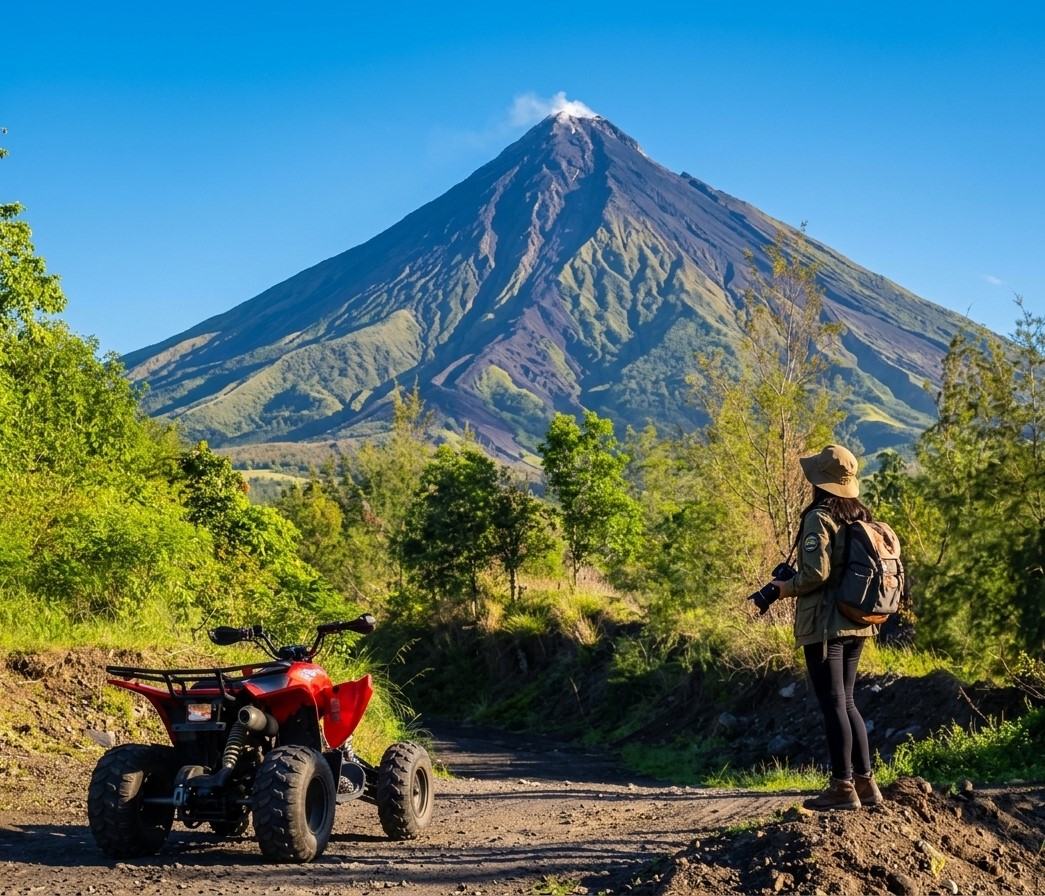
Today, the site balances this heavy history with dynamic eco-tourism. For thrill-seekers, renting an All-Terrain Vehicle (ATV) and roaring through the rugged, river-carved lahar trails at the foot of Mount Mayon is an exhilarating way to traverse the very volcanic paths shaped by historical eruptions.
Pairing Your Visit: Other Albay Destinations
Daraga is the perfect gateway to explore the wider wonders of Albay. Once you've paid your respects and soaked in the history of Cagsawa, continue your journey to these nearby spots:
- Sumlang Lake: Unwind on a traditional bamboo raft over placid waters with Mount Mayon framing a picture-perfect afternoon.
- Quitinday Green Hills & Quituinan Hill: Head to these locations for undulating, velvety green landscapes offering stunning volcano vistas.
- Solong Eco Park: Delve into serene forest trails and mystical limestone caves, ideal for an afternoon of quiet eco-tourism.
- Kawa-Kawa Hill: Visit this unique caldera-shaped hill that functions as both a peaceful nature retreat and a prominent pilgrimage site.
- Hobbit Hill & Paayahayan sa Bulod: Embrace your whimsical side at these themed hilltop spots offering panoramic views.
Logistics & Travel Guide
Getting There
Located roughly 8 kilometers from Legazpi City, the ruins are easily accessible. For official regional updates, consult the Department of Tourism's Albay page.
- By Public Transport: From Legazpi, ride a jeepney bound for Camalig, Guinobatan, or Polangui. Alight at the Cagsawa junction and hire a quick tricycle ride to the entrance.
- By Car: Navigate via the AH26 (Maharlika Highway) towards Daraga. The junction is marked by large signs.
Estimated Costs
| Expense Category | Estimated Cost (PHP) |
|---|---|
| Park Entrance Fee | 50 - 100 PHP (Discounts for students/seniors) |
| Jeepney Fare (Legazpi to Junction) | ~ 20 - 30 PHP |
| Tricycle from Junction | 20 - 50 PHP |
| ATV Lahar Adventure (Optional) | 1,500 - 3,000 PHP (Varies by trail) |
The Lazy Traveler Verdict
Summary: The Cagsawa Ruins is far more than just a photo op. The deep, tragic history paired with the resilience of the community makes this a profoundly grounding and necessary stop for any traveler in the Philippines.