In This Guide
What Makes Daraga Church Architecturally Unique?
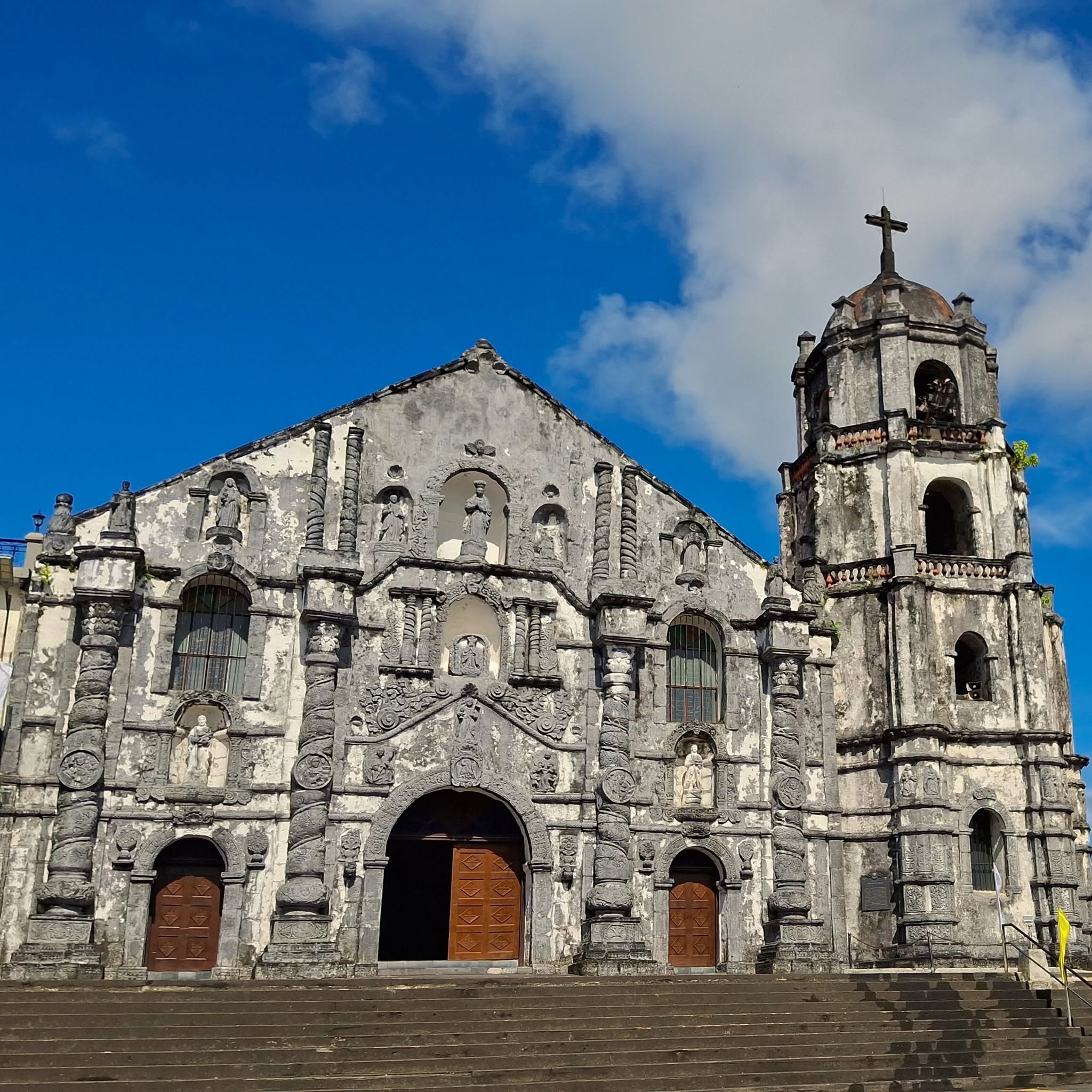
Daraga Church stands out as a world-class example of Churrigueresque architecture - an incredibly intricate, ultra-Baroque style woven seamlessly with Mexican and Renaissance Gothic influences. Officially known as Nuestra Señora de la Porteria Parish Church, this 18th-century masterpiece was constructed by Franciscan missionaries in 1773 and rests proudly atop a hill in Albay.
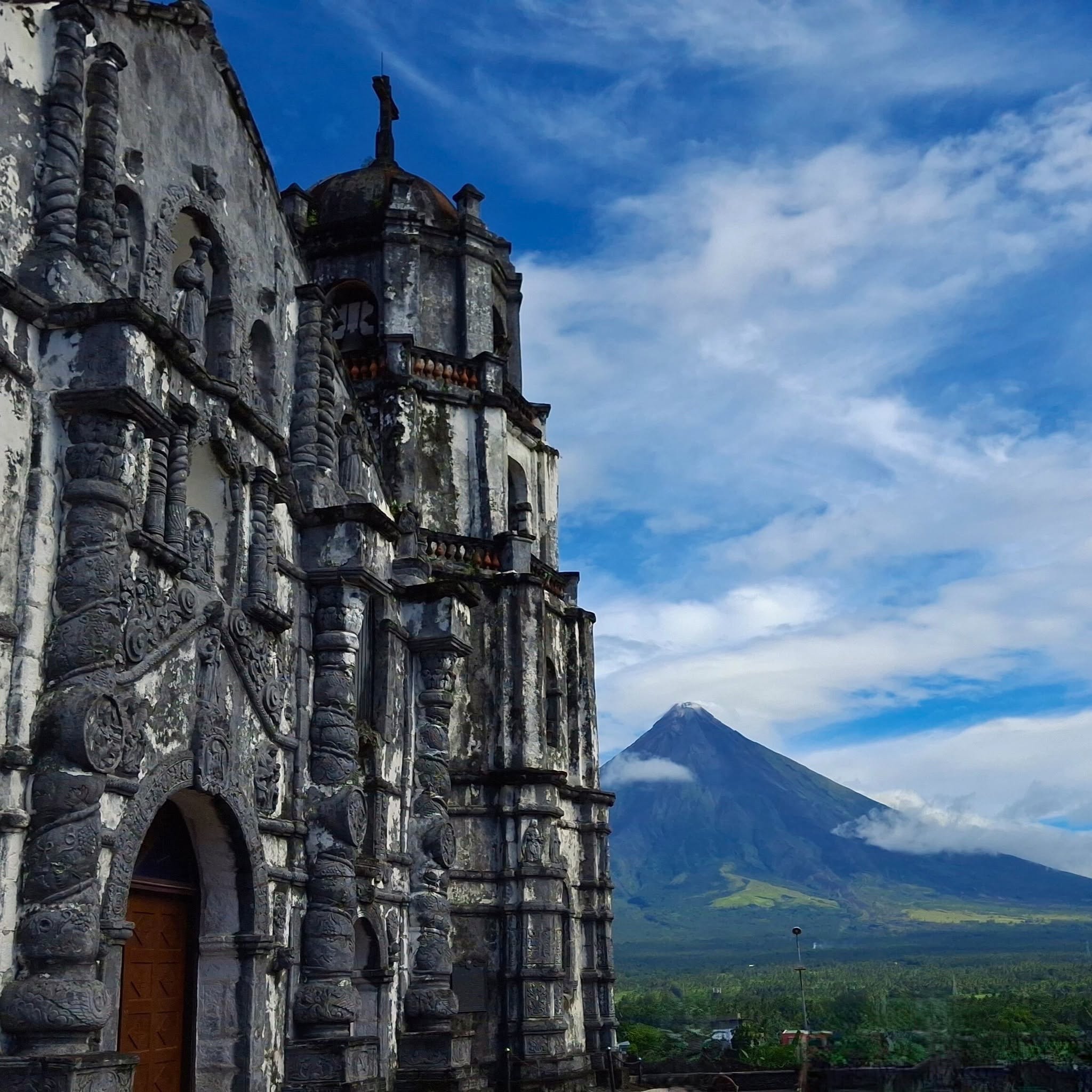
Unlike traditional Spanish colonial churches that used horizontal ledges or vertical pillars to break up the front wall, the Franciscans carved Daraga as one continuous, uninterrupted stone canvas. Four massive Salomónica columns anchor the structure, spiraling upward as if wrapped in creeping vines, fern leaves, and grapes. Carved directly into the center of these pillars, you will find circular medallions depicting the Four Evangelists: Matthew, Mark, Luke, and John.
Gaze just above the arched main entrance to read the Latin inscription permanently etched into the black volcanic rock: "Bene fundata est domus Domini supra firmam petram" (Well founded is the house of the Lord on firm rock). Given the church's perilous proximity to Mount Mayon, this serves as both a profound statement of faith and a geological boast.
The Octagonal Campanile & The Lost Interior
The Towering Bell Masterpiece
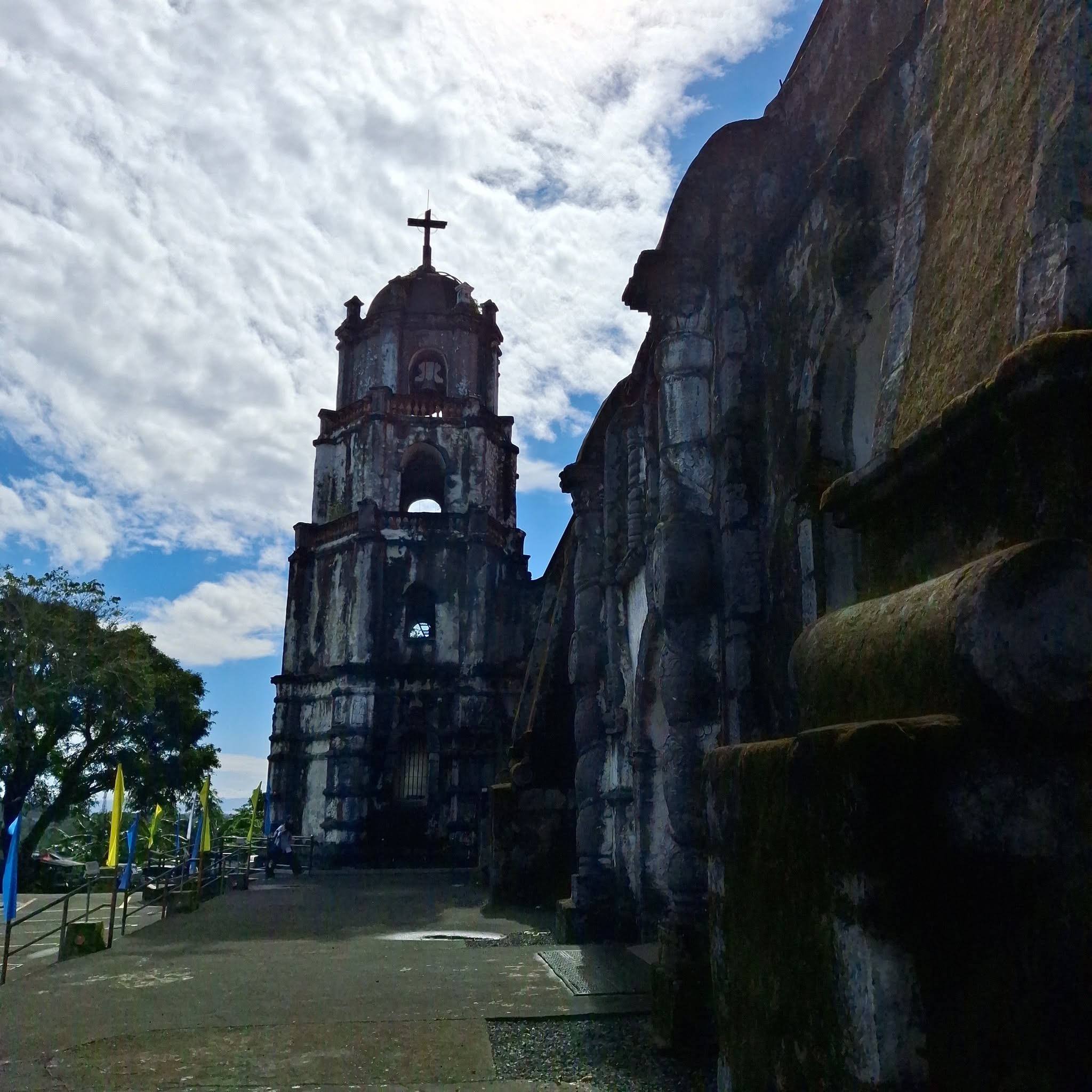
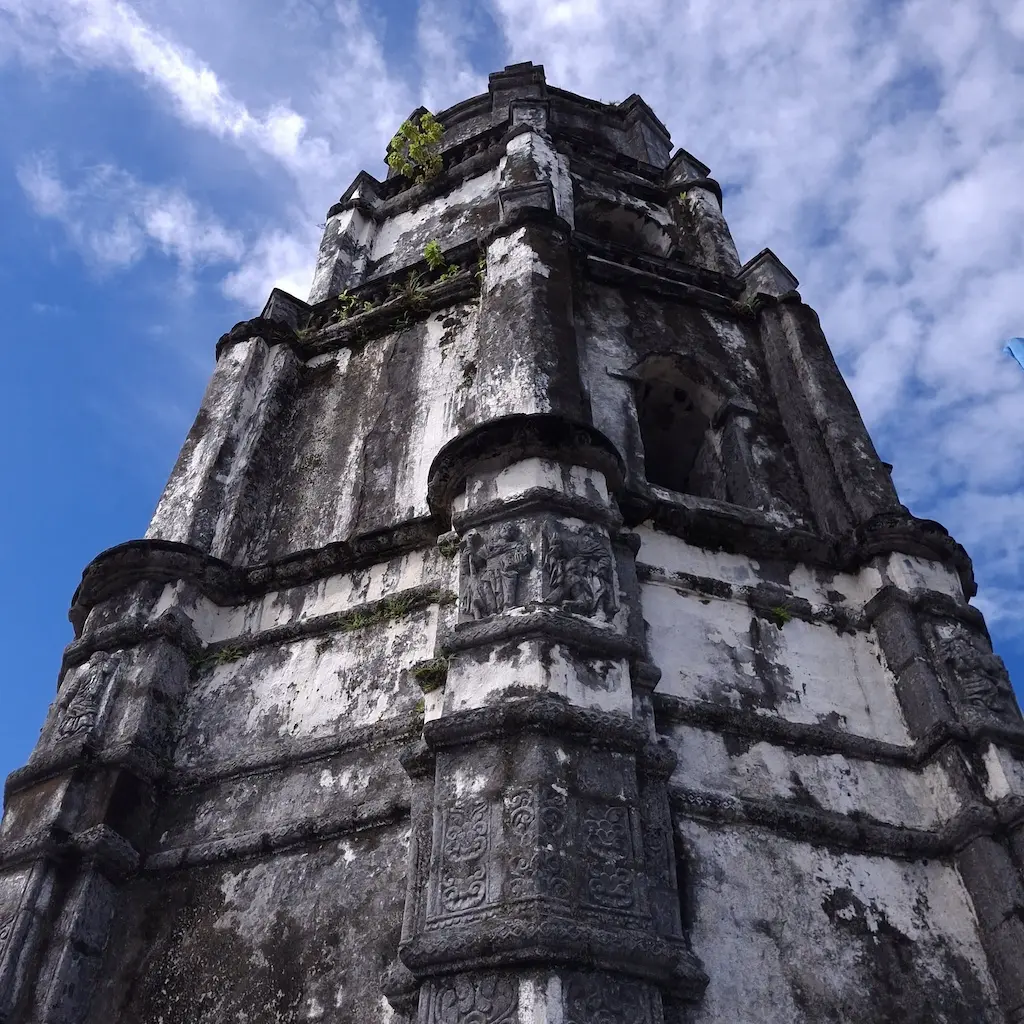
Rising 21.17 meters (69 feet) into the Bicolano sky, the adjacent four-level octagonal campanile remains a structural marvel. Look closely at the dark geometric walls to spot the individual stone carvings of the Twelve Apostles standing guard over the valley. The belfry houses a massive 1.7-meter-wide bell that historically echoed across the entire province, calling locals to sanctuary during volcanic unrest.
A Tale of Two Renovation Eras
While the exterior showcases perfectly preserved ancient artistry, stepping inside reveals a completely different historical reality. During World War II, joint American and Filipino bombers attacked Japanese forces occupying the church, causing massive internal destruction. Post-war reconstruction happened hurriedly, utilizing mismatched, utilitarian styles to simply make the building functional again.
Decades later, between 1971 and 1973, misguided renovations following the Vatican II council stripped the sanctuary of its remaining heritage. Workers removed ancient altars, tore out antique pulpits, and covered historical wall designs with stark white paint. Today, the majestic volcanic facade remains the true treasure of this site, protecting the echoes of a heavily altered interior.
When is the Best Time to Visit and See Mayon Volcano?
The optimal time to visit Daraga Church falls between 6:00 AM and 8:00 AM to catch the cool morning breeze and clear, unobstructed views of Mount Mayon before the midday clouds roll in.
Because the church rests atop a strategic hill, visitors enjoy sweeping, elevated views of the landscape below. Arriving early ensures you beat the heavy tourist crowds and capture the soft, golden-hour light reflecting off both the church's ancient walls and the perfect cone of the volcano in the distance.
Historical Significance and Preservation
The church served as a vital sanctuary for the surrounding towns. Following the catastrophic 1814 eruption of Mount Mayon that buried the original Cagsawa Church, survivors fled up the hill to Daraga, cementing the structure as the region's primary parish.
Recognizing its profound artistic and structural value, the National Museum of the Philippines officially declared Daraga Church a National Cultural Treasure in 2007. This prestigious designation highlights its unmatched preservation as one of the country's finest examples of 18th-century ecclesiastical engineering.
Pairing Your Visit: Other Albay Destinations
Exploring Daraga Church perfectly anchors a broader journey through Albay's uncommercialized slow-living spots. After admiring the heritage site, you can seamlessly connect your itinerary to these nearby provincial gems:
- For High-Altitude Views: Drive up to Ligñon Hill Nature Park or relax on the scenic lawns of Quituinan Hill and Paayahayan sa Bulod.
- For Relaxing Nature Escapes: Float peacefully on Sumlang Lake or wander through the shaded trails of Bambusetum Park.
- For Unique Topography: Hike the rolling peaks of Quitinday Green Hills, explore the Shire-inspired Hobbit Hill, or walk the crater rim at Kawa Kawa Hill.
- For Agri-Tourism: Spelunk and pick fresh dragon fruit at the nearby Solong Eco Park.
How Do You Get to Daraga Church & What Are the Costs?
Travel Directions
Travelers can easily reach Daraga Church by taking a 15-minute jeepney or tricycle ride from downtown Legazpi City, with public transit dropping you off directly at the municipal hall at the base of the hill. From the drop-off point, a short but steep staircase leads you directly up to the church courtyard. For those driving private scooters or rental cars, a paved access road winds safely to the top.
Estimated Budget
Visiting this National Cultural Treasure is highly accessible, making it an excellent stop for budget-conscious slow travelers.
| Expense Category | Estimated Cost (PHP) |
|---|---|
| Entrance Fee | Free (Donations highly encouraged) |
| Tricycle from Legazpi City | 50 - 100 PHP (per trip) |
| Jeepney (Legazpi to Daraga) | 15 - 20 PHP (per person) |
| Opening Hours | 5:00 AM - 8:00 PM Daily |

If you are planning to take portrait photos against the church's facade, wear light or neutral colors (like beige, white, or light linen). The dark, porous volcanic stone absorbs a lot of light in photographs, so wearing lighter clothing provides a beautiful, striking contrast!
The Lazy Traveler Verdict
Summary: Daraga Church delivers an awe-inspiring combination of deep historical roots and spectacular scenic beauty. The lack of an entrance fee makes it highly accessible, while the stunning volcanic architecture grounds your journey in authentic Bicolano heritage. A truly essential, peaceful stop in Albay.